Iran says technical talks with US concluded, forming nuclear, sanctions working groups

What do we know about $300-billion fund to Iran?
At the heart of the deal to end the Middle East war lies a $300 billion fund to rebuild and develop Iran — but so far it is unclear who will foot the bill.
Here’s what we know about the fund.
What’s in the text?
The memorandum of understanding says Washington “undertakes with regional partners to develop a definitive mutually agreed plan with at least $300 billion for the reconstruction and economic development” of Iran.
“The mechanism for the implementation of this plan will be finalised as part of a final deal within 60 days. All required licenses, waivers, and permissions needed for the relevant financial transactions will be granted by the United States of America,” it added.
The text does not say who will contribute to the fund, which is only one of many economic incentives the Americans have dangled in front of Iran to encourage them to sign a definitive deal.
The text also states the end of “all types of sanctions” on Iran upon the signing of a final deal, with Washington immediately issuing waivers allowing Tehran to sell oil.
“I think the idea of mentioning this fund in the MOU is to show Iran all the carrots that are available if they abide by the MOU and show goodwill in negotiations moving forward,” said Anna Jacobs, a non-resident fellow at the Arab Gulf States Institute.
US Vice President JD Vance said Iran would only get the rewards if it proves it has complied with the terms that will be hammered out in the 60-day period, which he said began on Thursday.
Not a ‘dime’ from US taxpayers
US hawks have lambasted the Trump administration for giving too many concessions to Iran, and have described the fund as a boon that will embolden its theocratic government.
Influential senator Lindsey Graham compared the move, should the funds come from the West, to granting a Marshall Plan to Germany “with the Nazis still in charge” — in reference to the American aid package that helped rebuild Europe after World War II.
Vance said Iran will “never get a dime” from American taxpayers under the deal.
Iran President says statements not in ‘agreed text do not help advance’ talks
“The effectiveness of the talks depends on full commitment to the agreed obligations and their precise implementation,” said Iranian President Masoud Pezeshkian on X. “Progress on this path will be measured by practical adherence to accepted responsibilities.”
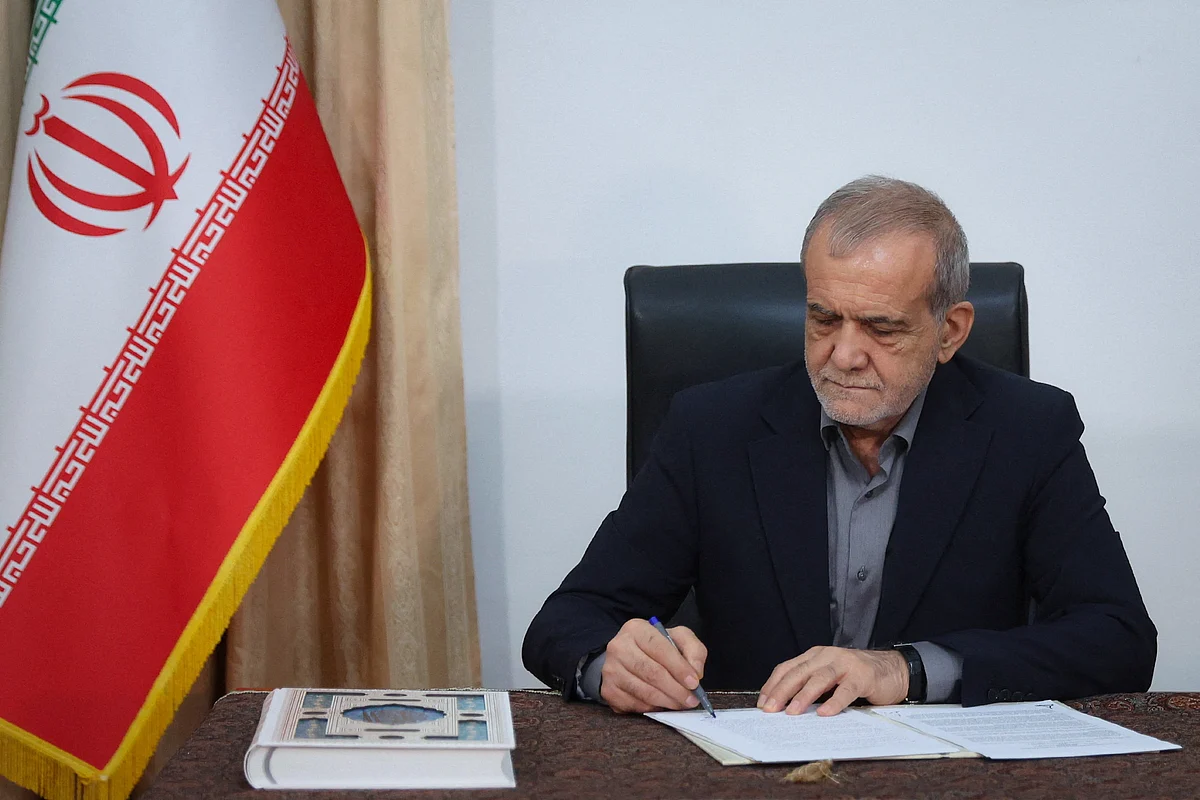
Iranian President Masoud Pezeshkian signing the document of U.S. Memorandum of Understanding in Tehran, Iran
Iran says technical talks with US in Switzerland have concluded
Technical talks between Iran and the United States in Switzerland have concluded, with negotiating groups to be set up on nuclear issues and sanctions, Iran’s state media reported Tuesday.
The negotiators “decided that four working groups would be established: Sanctions Termination, Nuclear Affairs, Reconstruction and Economic Development, and Monitoring and Implementation,” said IRNA state news agency, quoting Deputy Foreign Minister Kazem Gharibabadi.
Lebanon building damage estimated at $1.38 billion
Direct damage to buildings in south Lebanon in the latest war between Israel and Hezbollah is estimated at around $1.38 billion, a UN agency and a Lebanese research centre said Monday.
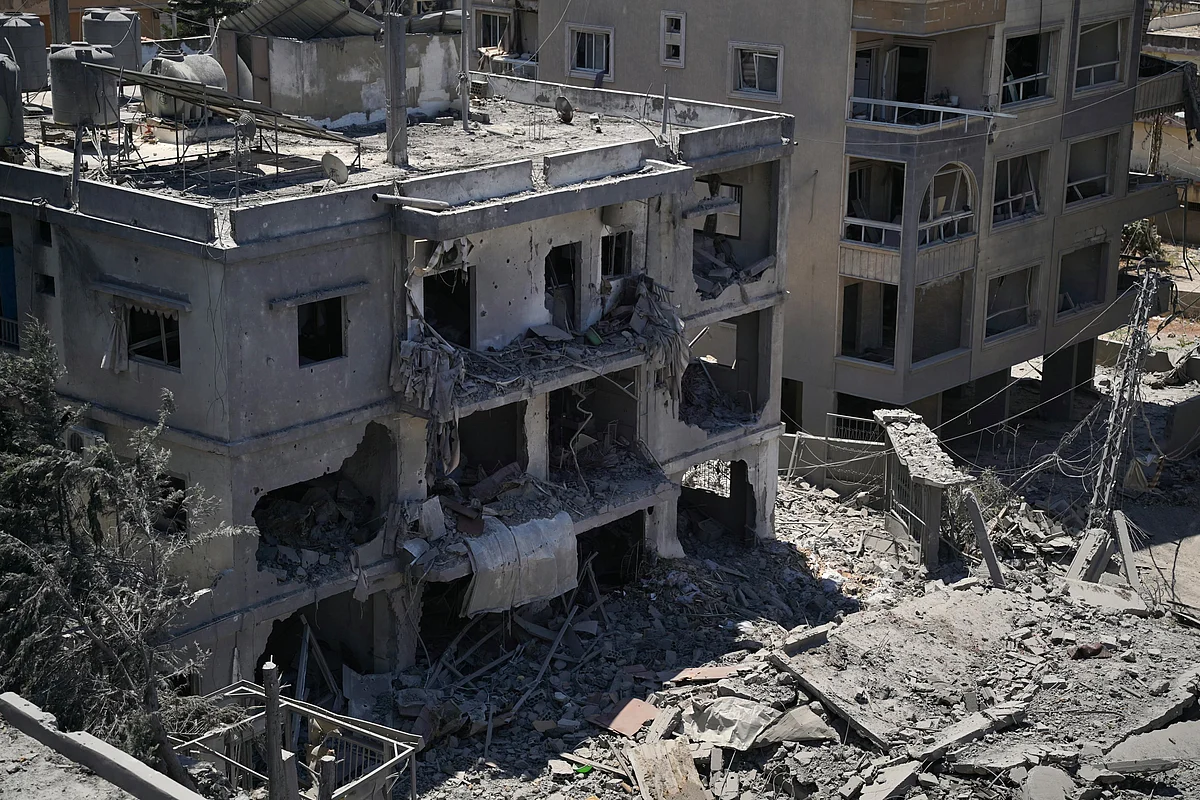
This picture shows heavily damaged buildings at the site of Lebanon’s central bank building that was targeted in an Israeli strike the previous day in the southern Lebanese city of Nabatieh
“In total, 11,095 buildings were completely destroyed, impacting 17,891 housing units, while 2,242 buildings sustained partial damage… and 9,311 buildings incurred minor damage,” the United Nations Development Programme (UNDP) and Lebanon’s government-linked National Council for Scientific Research (CNRS) said.
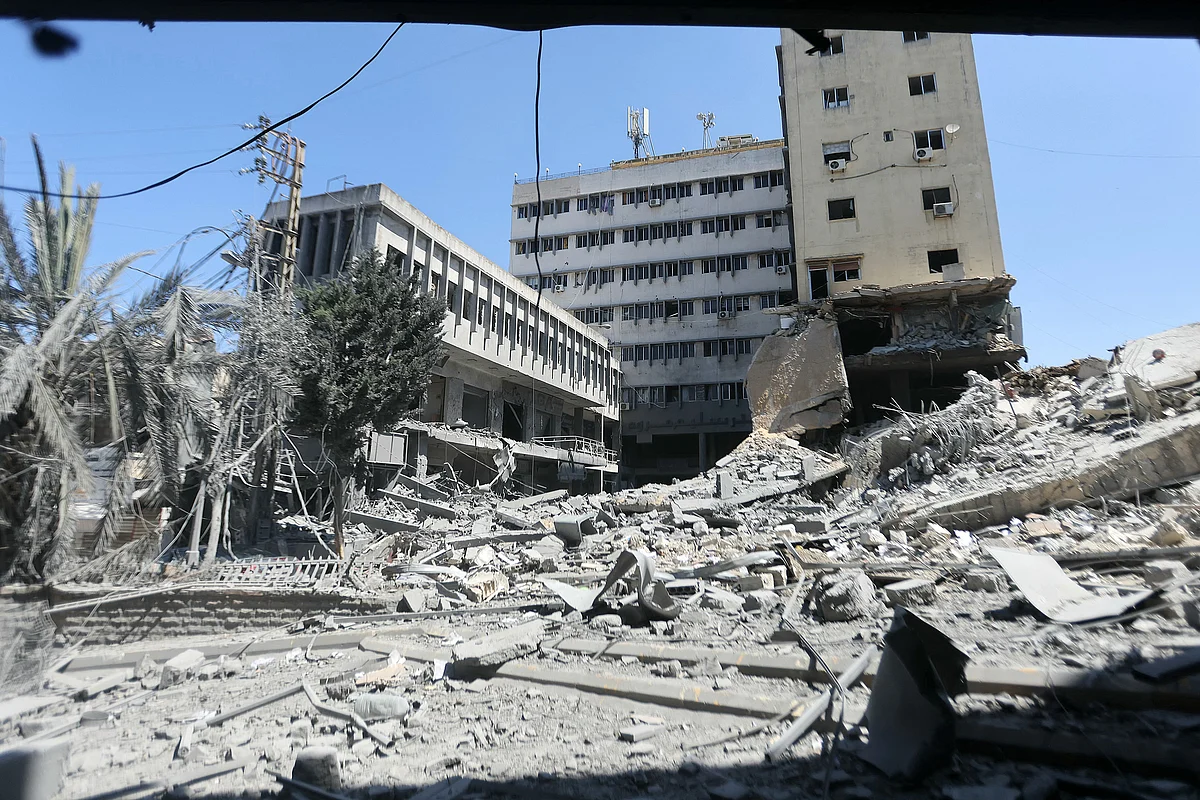
The rubble of a collapsed building is pictured following Israeli bombardment, in Nabatieh in southern Lebanon
It cited a “rapid building-level damage assessment” in the country’s south which compared satellite imagery from late April, nearly two months into the latest war, with those from October 2025, meaning it does not cover the latest weeks of the conflict.
“Findings indicate that direct damage to buildings in south Lebanon is estimated at $1.38 billion,” the statement added.
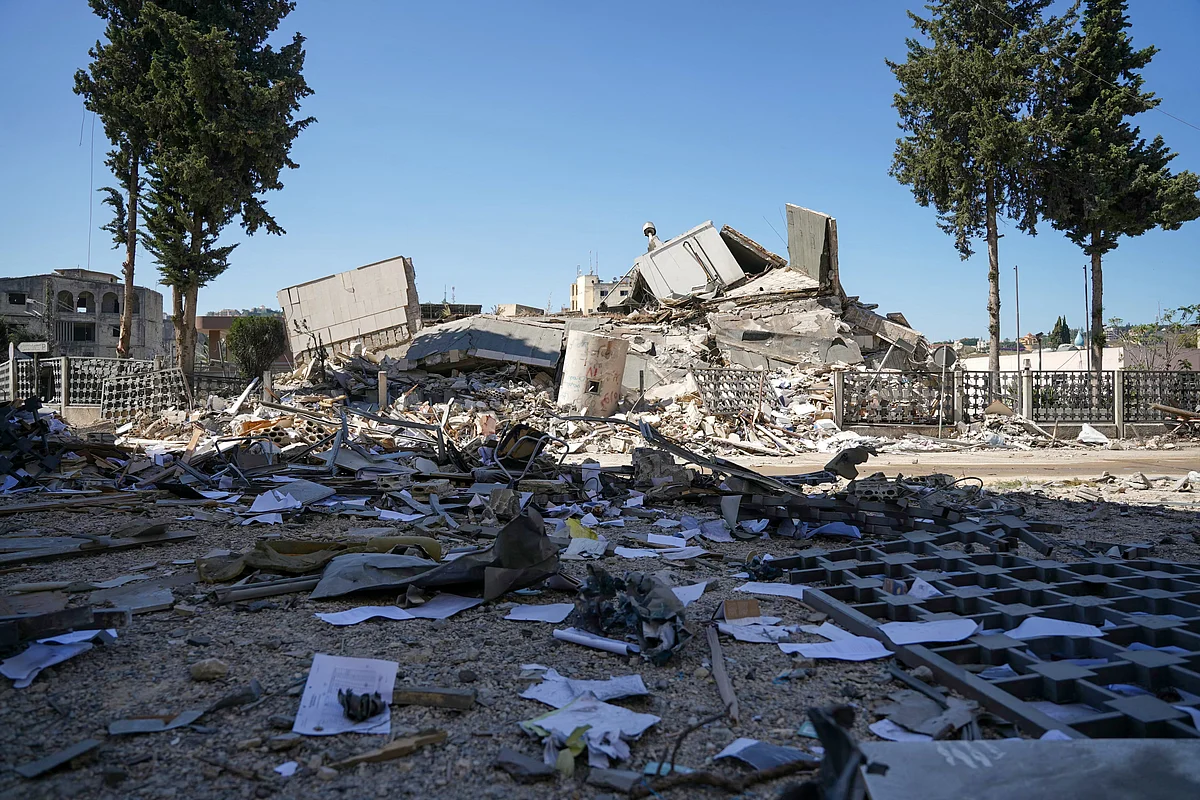
This picture shows heavily damaged buildings at the site of Lebanon’s central bank building that was targeted in an Israeli strike the previous day in the southern Lebanese city of Nabatieh
Trump threatens to not help Nato countries if asked
US President Donald Trump said Monday that he could refuse to help Nato countries as pay back for the lack of support from member nations with the US military operation in Iran.
“We spent all of this money. And then when we want to maybe have help on small stuff… They say no we would rather not help,” Trump said during a press conference in the Oval Office. “Stupid thing to say, because we can say that to them if we want, and we might,” he added.
Despite strained relations with the alliance, Trump is set to attend the Nato summit in Ankara, Turkey next month.
Israel says military will maintain security zone in southern Lebanon
Israeli Prime Minister Benjamin Netanyahu, Israeli defence minister and military chief said the military would continue to act to “neutralise” threats against Israeli soldiers and citizens, demolish militant infrastructure and maintain the security zone in southern Lebanon, according to a joint statement issued after a security discussion.
The statement added that the three officials “made it clear that the security of Israeli citizens and IDF forces will remain their guiding principle without compromise.”
Netanyahu declared Monday that Israeli forces had been granted “full freedom” to engage any threat encountered in southern Lebanon, reaffirming that troops would remain deployed in the region for as long as deemed necessary.
“My directive, and that of the minister of defence, to the IDF is clear and has not changed: Our fighters in southern Lebanon have full freedom of action to thwart any direct or developing threat to them or to the residents of the North,” Netanyahu said in a statement. “The IDF has no restrictions on this matter.”
Iran negotiator says Tehran to administer Hormuz strait
Iran’s chief negotiator Mohammad Bagher Ghalibaf said that the Strait of Hormuz will be administered by Tehran, state media reported on Tuesday, following talks pushing to end the US-Israeli war on the Islamic Republic.
Iran and the United States agreed on Monday to set up communication lines to keep the vital shipping route open, mediators said, after their first round of talks in Switzerland.
“The Strait of Hormuz will never return to its pre-war conditions and will be administered by the Islamic Republic of Iran, in accordance with international law,” Ghalibaf said on his return from the talks, according to IRNA.
In a video posted to Ghalibaf’s Telegram account, he said the talks at the luxury Swiss resort of Burgenstock produced “good achievements”.
“In my view, this trip had good achievements, especially regarding the discussion of the Strait, the Lebanon discussions, the question of oil waiver, and the matter of releasing the frozen funds,” he said. “Of course, we believe we are still at the beginning of this work and must continue our efforts,” Ghalibaf added in the video.
Iranian state media reported that Ghalibaf made a stop in Oman, which shares the Strait of Hormuz.
Maritime traffic in the strait continued to flow on Monday at a faster pace than before the US-Iranian agreement on talks to end the war, according to tracking firms.
US-Iran talks yield results
Peace talks in Switzerland seem to be yielding results, with fighting in Lebanon finally abating and US waiving sanctions on Iran for 60 days from Monday.
Ships appear to be passing through the Strait of Hormuz, although the administration of the waterway is still in question. Iranian officials travelled to Oman to discuss the issue, while US Secretary of State Marco Rubio plans to visit UAE, Bahrain and Kuwait to discuss the deal and “efforts to secure full and free safe transit through the Strait of Hormuz”.
Israel said it would maintain its military’s presence in southern Lebanon to “neutralise” threats against Israeli soldiers and citizens, demolish militant infrastructure and maintain the security zone in southern Lebanon.
Stay tuned as we bring you the latest updates from the talks and the impact of the war.


