Watch: Holy Kaaba washed with oud oil, Zamzam, rose water in annual ceremony

On the 15th day of Muharram, the first month of the Islamic lunar calendar, an annual ceremonial event is held at the Masjid Al Haram in Makkah, where the Holy Kaaba is washed in a highly symbolic and carefully organised ritual.
The ceremony involves a series of traditional steps carried out by designated officials, using Zamzam water mixed with rose water and perfumed oils, reflecting the spiritual significance of purification and care for Islam’s holiest site.
Earlier in June, the Kaaba was draped in its new Kiswa in a powerful annual ritual that reflects Saudi Arabia’s continued care for Muslims’ Qibla. The moment also showcased the Kingdom’s craftsmanship, as the covering was produced entirely by Saudi artisans at the King Abdulaziz Complex for the Kaaba’s Kiswah in Makkah.
Stay up to date with the latest news. Follow KT on WhatsApp Channels.
This year, the washing process was conducted on Tuesday, June 30 (Muharrram 15) by Prince Saud bin Mishal bin Abdulaziz, Deputy Governor of the Makkah Region on behalf of the Custodian of the Two Holy Mosques, King Salman bin Abdulaziz Al Saud. Watch the following videos:
Some of the footage from the Washing of the Kaabah Ceremony pic.twitter.com/6m7MoI2NS2
— (@HaramainInfo) June 30, 2026
On behalf of the Custodian of the Two Holy Mosques..
The moment of the arrival of the Deputy Governor of Makkah to begin the rituals of washing the Kaaba and ascending into it pic.twitter.com/UimrMVN1Qw
— Inside the Haramain (@insharifain) June 30, 2026
Materials used in washing the Kaaba
The washing of the Kaaba is carried out in carefully prepared three stages using specific quantities of sacred and fragrant materials. The process begins with preparation, which includes 20 litres of Zamzam water and 80 ml of premium oud (agarwood) oil, both of which are traditionally associated with purity and blessing.
The second stage is the actual washing of the Kaaba. This involves 540 ml of Taifi rose water, 11 litres of a specially prepared Kaaba washing perfume mixture, and 3 ml of musk. These ingredients are used to cleanse the interior with a blend of purified water and carefully selected fragrances.
The final stage focuses on perfuming and incensing the Kaaba. This includes 500 ml of Taifi rose oil along with 500 grams of premium oud wood chips, which are burned as incense. This stage completes the ritual by filling the space with rich and lasting aromas.
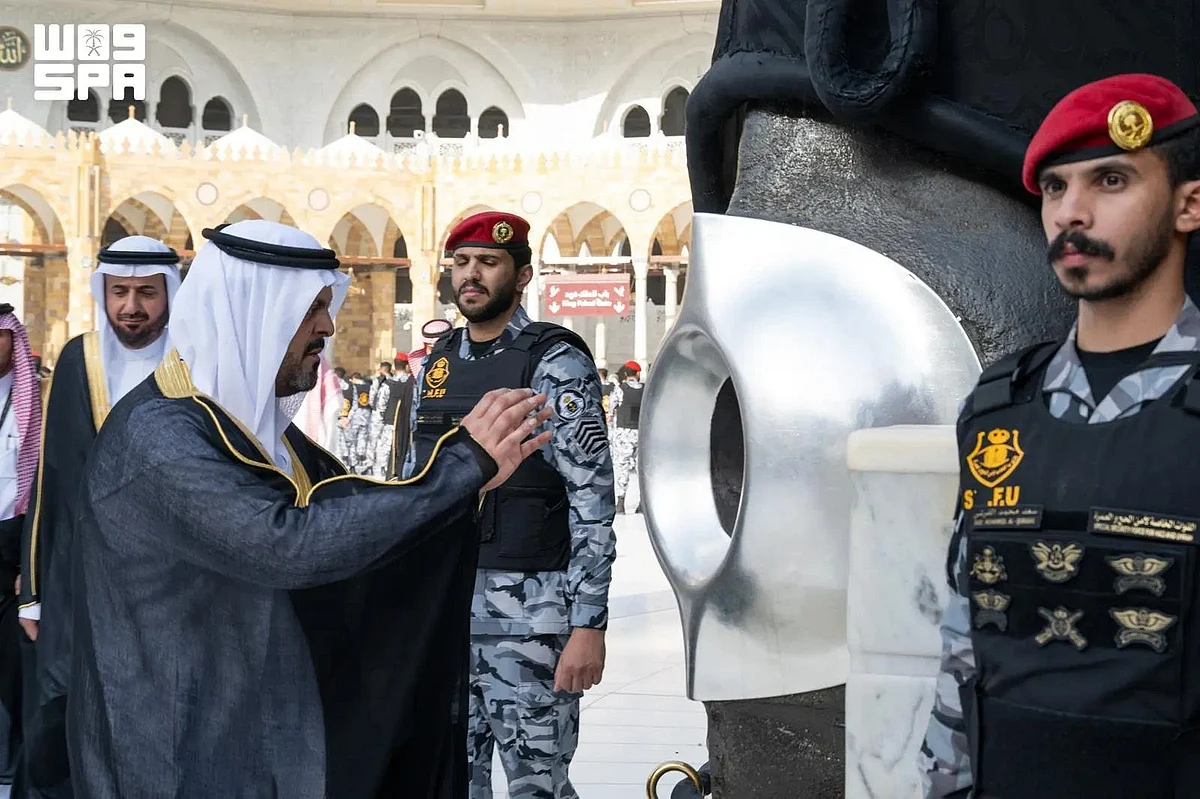
Prince Saud bin Mishal bin Abdulaziz, Deputy Governor of Makkah Region during the washing
The process explained
The washing of the Kaaba starts with lifting the lower part of its curtain in preparation for the start of the ceremony and to protect the Kiswah (the covering of the Kaaba) during the washing process. Technical and organisational preparations are then completed, and the mixture used for washing and perfuming is prepared.
The inner walls, pillars, and floor of the Holy Kaaba are then washed with Zamzam water mixed with Taifi rose water, using specially designated cloths.
Finally, the walls and corners are perfumed with oud oil and amber, and the Kaaba is further scented with the finest types of perfume and incense.
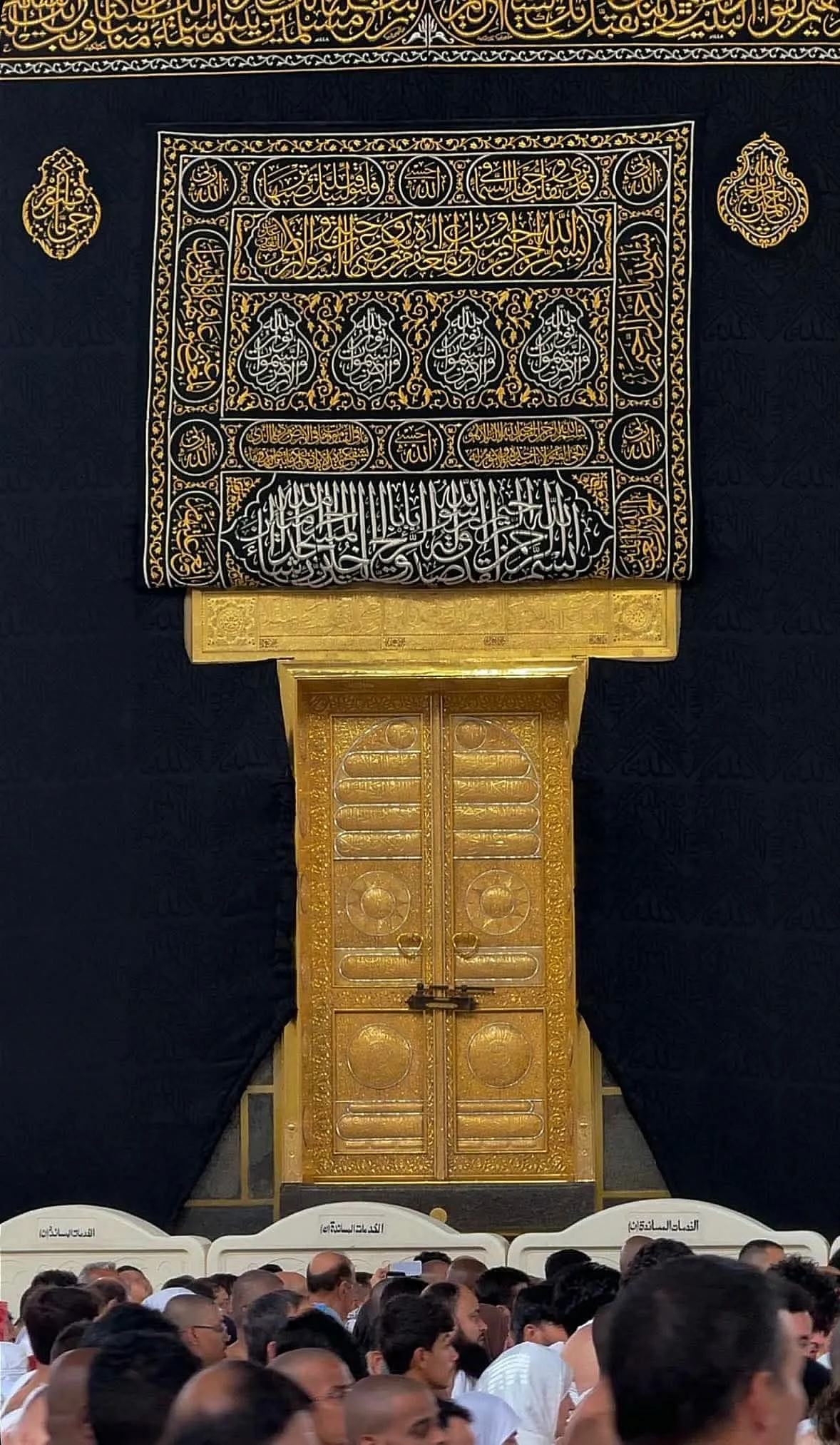
The door curtain of the Holy Kaaba has been raised to protect the Kiswa during the washing process and to allow easier access inside the Kaaba
Kaaba staircase
To ascend and enter the Kaaba in order to perform the washing from the inside, a special staircase is used. The structure is made from one of the finest types of wood, teak, known for its durability and resistance. It measures 5 metres and 65 centimetres in length, 4 metres and 80 centimetres in height, and 88 centimetres in width, with a total weight of approximately 6,500 kilograms.
It is equipped with several functional features designed for practical use and preservation, including a rainwater storage tank and a dedicated tank for washing the Kaaba. It also contains three separate tanks for air-conditioning water, along with central air-conditioning vents that cool the staircase from the inside. In addition, the structure is fitted with an internal lighting system and can operate for up to 24 hours on battery power.
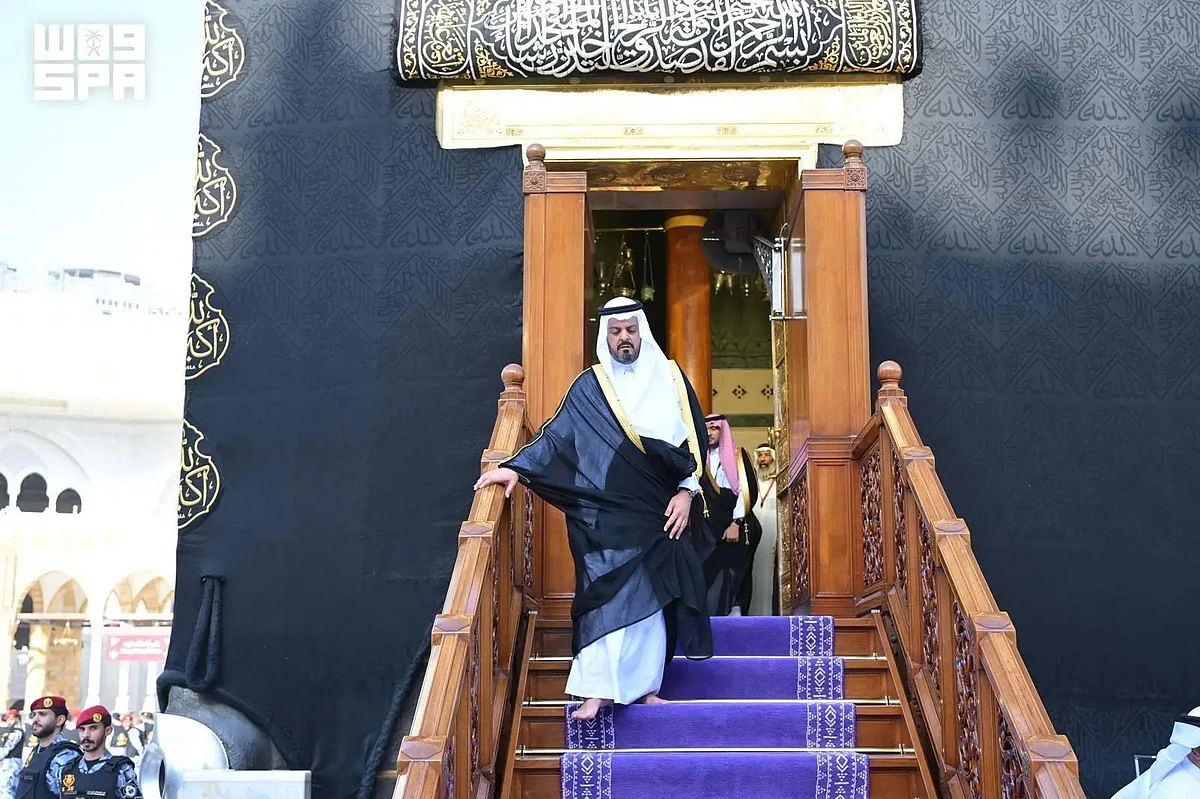
The Kaaba staircase


